
What Is a Guitar Capo, and Why Every Guitarist Should Own One?
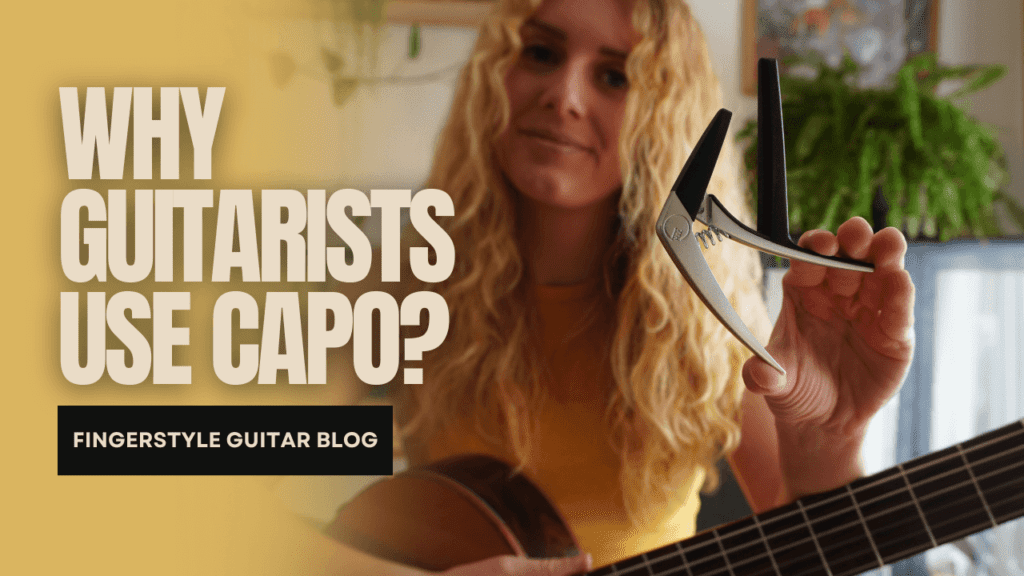
If you play guitar—especially fingerstyle—you’ve probably seen other players use a small clamp on the neck of their guitar. That little device is called a capo, and it can completely change the way you play and hear your instrument.
A capo isn’t just for beginners. Many professional guitarists, from acoustic legends to movie soundtrack arrangers, use capos to explore new tones, match vocal ranges, and make certain pieces easier to play. Whether you’re covering Ludovico Einaudi or arranging a theme like The Terminator soundtrack, knowing how and when to use a capo can open a new world of sound.
What Is a Guitar Capo?
A Simple Definition
A capo is a small device that clamps across the strings of your guitar on a specific fret. It shortens the playable part of the strings, raising the pitch of all notes equally.
For example, if you play an open C chord but place a capo on the second fret, you’ll actually be playing a D chord — using the same shape. That’s why many players love using capos when they want to change keys without learning new chord fingerings.
How It Works?
Think of a capo as a “movable nut.” It creates a new starting point on the neck, letting you play familiar shapes higher up. The result? You get brighter tones, easier chord transitions, and fresh sounds—especially useful in fingerstyle and open chord arrangements.
Different Types of Capos
There are many capo types, but three stand out:
Trigger Capos: Fast and easy to use during live shows.
Screw Capos: Precise tension control; great for clean sound.
Partial Capos: Cover only certain strings for creative tunings.
One of the most popular and player-friendly options is the G7th Nashville Capo. It’s lightweight, easy to move with one hand, and has perfect tension balance—so your guitar stays in tune. It’s an ideal choice for both beginners and serious fingerstyle players.
Why Guitarists Use a Capo?
To Change the Key Quickly
Sometimes you find the perfect song to cover, but it’s just a little too low or too high for your voice—or the original recording. With a capo, you can shift the key up or down in seconds. This is perfect for adapting movie themes or Einaudi pieces to your vocal or instrumental range.
To Get New Sounds
Placing the capo higher on the fretboard creates a brighter, more delicate tone—perfect for emotional fingerstyle pieces or cinematic covers. It’s one of the secrets behind that clear, ringing tone you hear in many professional recordings.
To Simplify Complex Chords
Some chords are just hard to reach, especially for intermediate players. A capo lets you play simpler shapes while keeping the same harmony. You can focus more on your right-hand technique, dynamics, and tone—key parts of good fingerstyle playing.
Main Benefits of Using a Capo
To Change the Key Quickly
Sometimes you find the perfect song to cover, but it’s just a little too low or too high for your voice—or the original recording. With a capo, you can shift the key up or down in seconds. This is perfect for adapting movie themes or Einaudi pieces to your vocal or instrumental range.
To Get New Sounds
Placing the capo higher on the fretboard creates a brighter, more delicate tone—perfect for emotional fingerstyle pieces or cinematic covers. It’s one of the secrets behind that clear, ringing tone you hear in many professional recordings.
To Simplify Complex Chords
Some chords are just hard to reach, especially for intermediate players. A capo lets you play simpler shapes while keeping the same harmony. You can focus more on your right-hand technique, dynamics, and tone—key parts of good fingerstyle playing.
Main Benefits of Using a Capo
1. Quick Transposing for Singers
If you ever sing or play with a vocalist, a capo lets you change the song’s key instantly to fit their range. No need to memorize new chords.
2. Versatility in Playing Styles
From classical movie soundtracks to acoustic pop and ambient Einaudi pieces, a capo lets you experiment with different sound textures easily.
3. Unique Tonal Colors
Try placing the capo on the 5th or 7th fret—you’ll notice your guitar sounds more like a mandolin or ukulele. This creates rich layers if you record multiple guitar tracks.
4. Better Fingerstyle Dynamics
Fingerstyle arrangements often rely on open strings for ringing harmonics. With a capo, you can move those open shapes higher up, adding clarity and depth to your sound.
How to Use a Capo Properly
Placement
Position your capo just behind the fret—not directly on top of it—to avoid buzzing or dead notes.
Pressure
Avoid tightening too much. The strings should ring cleanly, but the capo shouldn’t pull them sharp. Capos like the G7th Nashville have just the right pressure balance built in.
Experimentation
Try different fret positions and keys. Many soundtracks—especially minimal piano-style compositions like Einaudi’s—sound incredible when played with a capo between the 2nd and 5th frets.

Common Misconceptions About Capos
“Capos are only for beginners.”
Not true. Professionals use them constantly to explore new keys and tones.“Capos are cheating.”
Nope. They’re a creative tool, not a shortcut. Using one smartly can make your arrangements sound more professional.“Capos limit creativity.”
Actually, they do the opposite. They expand your possibilities.
Why Every Guitarist Should Own a Capo
Whether you’re practicing at home, recording a new video, or performing live, a capo gives you flexibility. It helps you adapt quickly, find new arrangements, and get that polished tone your listeners notice right away.
For fingerstyle players, it’s almost essential. It allows you to use open chord shapes higher up the neck, which gives your arrangements a bright, cinematic feel—perfect for the movie themes you love covering.
And the best part? A capo doesn’t cost much. A solid model like the G7th Nashville Capo is reliable, stylish, and built for years of use.